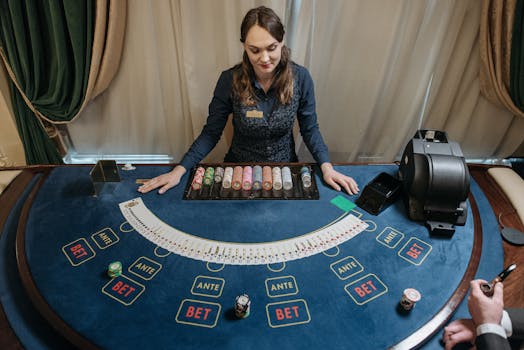
The casino industry, with its blend of excitement, risk, and potential reward, serves as a powerhouse in the global economy, generating billions in revenue each year. This article explores the intricate layers of casino operations, from floor management to sophisticated online platforms, and sheds light on the distinct business models that drive their success.
Understanding Casino Operations
Casino operations are a delicate balance between hospitality, entertainment, and financial management. The primary objective is not merely to entertain but to do so in a way that is profitable and sustainable. This involves a meticulous approach to managing gaming floors, attracting and retaining customers, and integrating technological advancements to enhance user experience and security.
.png)
Key Approaches in Casino Business
- The Integrated Resort Model
This model is exemplified by giants like Las Vegas' Bellagio or Singapore’s Marina Bay Sands. These establishments provide a comprehensive entertainment experience, featuring casinos, hotels, conference spaces, and even shopping centers. Their main strength lies in their ability to attract a diverse clientele, from casual tourists to serious gamblers. The challenge, however, is the substantial upfront investment required and the ongoing costs of operation and maintenance.
- The Online Casino Model
Online casinos have surged in popularity due to technological advancements and changing consumer behaviors. Platforms like Bet365 or PokerStars allow players to gamble from anywhere at any time, offering a vast array of games from blackjack to live dealer poker. The advantages include lower operational costs and a broader reach, but these platforms must navigate issues of regulatory compliance, cyber security, and the need for innovative technology to remain competitive.
- The Boutique Casino Model
Boutique casinos, such as The Ritz Club in London, cater to a niche market by offering a more personalized and exclusive gambling experience. They tend to attract high rollers who seek privacy and high-stake games in a luxurious setting. While these casinos offer higher profit margins per customer and strong customer loyalty, their market size is limited and sensitive to economic fluctuations.
Comparing the Models
The choice between these models depends on various factors including investment capacity, target demographic, and geographic location. Integrated resorts appeal through their all-encompassing offerings but require significant investment. Online casinos boast flexibility and lower overheads, but must constantly innovate to stay ahead in a highly competitive digital market. Boutique casinos offer exclusivity and high customer loyalty, though their success can be highly volatile and dependent on economic conditions.
Practical Examples
Marina Bay Sands in Singapore utilizes the integrated resort model to spectacular effect, creating a multi-faceted entertainment complex that appeals to both gamblers and non-gamblers. Bet365 leverages the global accessibility of the internet to reach a vast audience, offering everything from sports betting to casino games. On the smaller scale, The Ritz Club capitalizes on its prestigious location and reputation to attract a clientele looking for privacy and high-stakes gaming.
Conclusion
The casino industry's various business models each offer unique opportunities and challenges. The choice of model should align with a thorough understanding of market demands, competitive landscape, and economic conditions. For those looking to enter or invest in this vibrant industry, a strategic approach tailored to one’s specific circumstances and capabilities will be essential for enduring success. Whether through the sprawling allure of integrated resorts, the dynamic realm of online gambling, or the exclusive touch of boutique casinos, the key to profitability lies in adaptability and an in-depth understanding of consumer behavior.