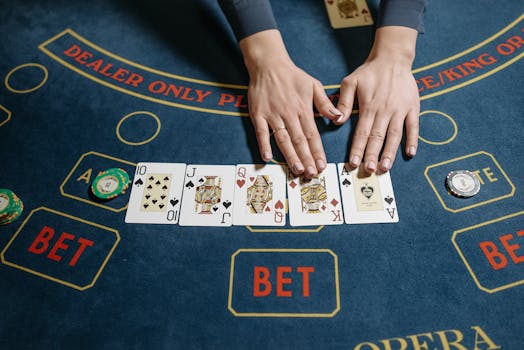
Casino games are not only about luck and chance; they also encompass significant mathematical elements that play a critical role in both the games themselves and the strategies used by players. Understanding the mathematical connections in casino games can enhance a player’s experience and potentially increase their chances of success.
Probability and Odds
At the heart of every casino game is the concept of probability. Probability is the measure of the likelihood that a specific event will occur. In casino terms, this could mean the likelihood of drawing a certain card, rolling a specific number, or landing on a particular slot on the roulette wheel. For instance, in roulette, the probability of the ball landing on a specific number is 1 in 37 on a European wheel, which has numbers from 0 to 36, and 1 in 38 on an American wheel, which includes an additional double zero (00).
.png)
House Edge and Expected Value
The house edge is a critical concept in gambling, representing the percentage of each bet that the casino expects to retain over time. This edge varies from game to game and is a direct measure of how much the game favors the house. For example, in the standard rules of blackjack, the house edge can be as low as 0.5% if played with perfect strategy. This edge is calculated based on the expected value, which determines what players can expect to lose or win on average from each bet placed.
Variance
Variance is another mathematical concept that describes the swings in luck that players experience while gambling. High variance games, such as slot machines, can result in substantial swings, which might lead to significant wins or losses in a short period. Conversely, low variance games, like blackjack, often result in smaller and more consistent wins or losses. By understanding variance, players can manage their bankrolls more effectively, choosing games that match their risk tolerance and playing style.
Practical Application
Let’s take a closer look at roulette and blackjack:
- Roulette: When betting on a color (red or black), the player might think they have a 50% chance of winning. However, because of the zero or double zero, the actual probability is slightly lower. This slight difference gives the house its edge.
- Blackjack: Through the use of basic strategy—making the optimal decision for every card combination—players can reduce the house edge significantly. Basic strategy is based on the probability of potential outcomes and what decisions will be most beneficial in the long run.
Advantages and Disadvantages
The primary advantage of understanding the mathematics behind casino games is the ability to make more informed decisions, which can lead to a more controlled and strategic approach to gambling. However, it’s crucial to note that no mathematical strategy can entirely eliminate the house edge, and the element of luck will always play a role.
Conclusion
The connection between mathematics and casino games is both intricate and essential. By understanding this relationship, players can improve their play strategies and potentially increase their chances of winning. However, it’s important to remember that casino games are designed for entertainment, and profits are not guaranteed. Resources are available for those who wish to delve deeper into the mathematics of gambling, and responsible gambling should always be a priority.