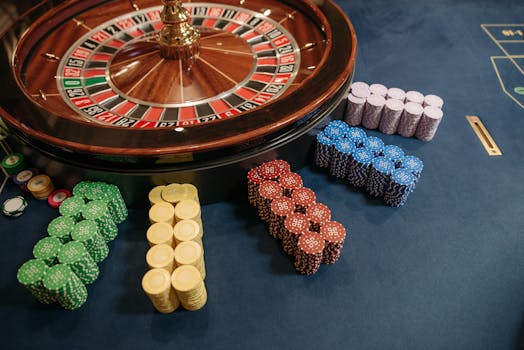
Understanding Casino Games and Probability: A Statistical Exploration
Casino games are a blend of luck, strategy, and statistical probability. Whether you're a novice or a seasoned gambler, understanding the probabilistic underpinnings of these games can significantly enhance your gaming experience and potentially lead to better outcomes. This article provides a comprehensive overview of the statistical aspects of casino gambling, delving into how probability influences outcomes and how you can leverage this knowledge in real-world scenarios.
Introduction to Probability in Casino Games
.png)
At its core, each casino game is governed by principles of probability, determining the odds of various outcomes. From roulette and blackjack to slot machines, an understanding of these principles is pivotal in devising effective strategies and managing your bets wisely.
Key Concepts in Casino Probability
- The House Edge
The house edge is fundamentally the casino's built-in advantage over players. It varies across different games and is a direct reflection of the probability of winning and the payouts provided. For example, blackjack is known for having one of the lowest house edges, which can be further reduced with strategic play.
- Probability and Slot Machines
Slot machines operate on a random number generator (RNG), which ensures each spin is independent of the previous one. The probability of landing a specific combination remains constant, but the game's payout structure (return to player, or RTP) is what players should focus on. A higher RTP means a better chance of winning back your wagers over time.
- Roulette and Probability
Roulette is rich with different betting options, each carrying its own probability of winning. Simple bets like red or black are close to having a 50% chance of winning, whereas a single number bet offers a much higher payout at a much lower probability. Strategies such as the Martingale or Fibonacci can be applied, but they come with risks, particularly in the face of consecutive losses.
Comparing the Advantages and Disadvantages
Strategies and games vary widely in their approach and risk level. For instance, the Martingale strategy can potentially offset losses but might lead to significant financial jeopardy during long losing streaks. On the other hand, while slot machines may promise substantial payouts, their higher house edge suggests a lower overall probability of winning.
Practical Examples
Imagine playing blackjack with a house edge of about 1%. This implies that for every $100 you bet, your expected loss over time amounts to roughly $1, provided you stick to basic strategy. Contrastingly, a slot machine with a 95% RTP effectively has a 5% house edge, meaning an expected loss of $5 per $100 bet.
Conclusion and Recommendations
Grasping the statistical elements of casino games can profoundly affect your approach to gambling, from game selection to the application of betting strategies. Opt for games with lower house edges and practice disciplined bankroll management to improve your chances of success. Always engage in gambling activities responsibly, recognizing the inherent risks and the element of chance involved. For those eager to apply these insights, start with lower-stakes settings and games known for favorable odds, and remember, practice makes perfect.