Casino Games: A Mathematical Approach to Winning and Understanding the Odds
The world of casino gaming is one of excitement, risk, and potential reward. But beneath the bright lights and spinning reels lies a universe governed by mathematics. Every card dealt, every spin of the roulette wheel, and every roll of the dice is subject to the unyielding laws of probability and statistics. For the player who wants to go beyond instinct and luck, understanding the mathematical underpinnings of casino games can turn a night of entertainment into an intellectual challenge—and sometimes, a profitable one.
This article explores how mathematics shapes every aspect of casino games, from the house edge to strategies based on probability. Whether you’re a casual player or a curious mathematician, this guide will reveal how numbers, not just fortune, decide the fate of casino games.
The Foundation: Probability in Casino Games
Probability—the branch of mathematics that calculates the likelihood of events—is at the heart of every casino game. Each game is designed with a set of rules that define the possible outcomes, and mathematics is used to determine the odds of each outcome occurring.
.png)
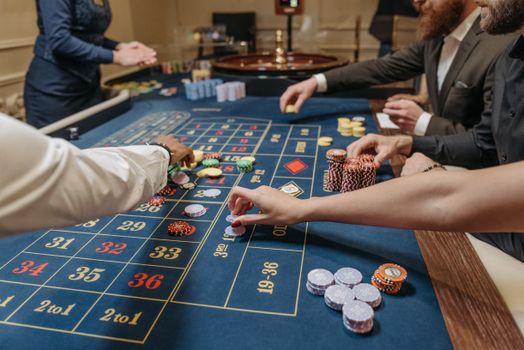
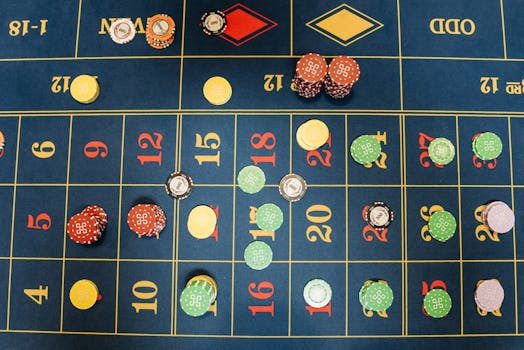
For example, consider roulette. In European roulette, the wheel has 37 slots (numbers 1-36 and a single zero). If you bet on a single number, the probability of winning is 1 in 37, or about 2.70%. In American roulette, an extra double zero brings the total to 38 slots, lowering your odds to 2.63%.
Similarly, in blackjack, the probability of being dealt a natural blackjack (Ace and a 10-value card) from a standard 52-card deck is about 4.83%. Games like craps, baccarat, and slot machines all have their own probability distributions, affecting both potential payouts and the house advantage.
Mathematically inclined players can use these probabilities to make more informed bets, avoid high-risk wagers, and even devise complex betting systems. However, it’s important to remember that while probability can inform decisions, it cannot guarantee outcomes over the short term.
House Edge: How Casinos Use Mathematics to Ensure Profit
The house edge is a mathematical expression of the casino’s built-in advantage. It represents the percentage of each bet that the casino expects to keep over the long run. This is not a trick—it's a carefully calibrated system, and it’s different for every game.
For instance, European roulette has a house edge of about 2.7%, while American roulette’s extra zero increases the edge to 5.26%. Blackjack, when played with optimal strategy, can have a house edge as low as 0.5%. Slot machines typically have a much higher house edge, ranging from 2% to 10%, depending on the machine and the casino.
The table below compares the house edge of popular casino games:
| Game | House Edge (%) | Typical Payout |
|---|---|---|
| Blackjack (optimal play) | 0.5 | 1:1 |
| European Roulette | 2.7 | 35:1 (single number) |
| American Roulette | 5.26 | 35:1 (single number) |
| Baccarat (Banker bet) | 1.06 | 1:1 minus 5% commission |
| Craps (Pass Line) | 1.41 | 1:1 |
| Slots | 2-10 | Varies |
Over time, this mathematical edge guarantees that casinos will make a profit. While individual players may win big on a lucky night, the law of large numbers ensures that the house always wins in the long run.
Expected Value: Evaluating Casino Bets
Expected value (EV) is a fundamental concept for anyone taking a mathematical approach to casino games. It represents the average amount you can expect to win or lose per bet if you were to repeat the same wager over and over.
The formula for expected value is simple: EV = (Probability of Winning x Amount Won per Bet) - (Probability of Losing x Amount Lost per Bet)
Let’s apply this to a simple coin toss with a $1 bet. If you win, you get $2 (your $1 back plus $1 in winnings). The probability of winning is 0.5, and the probability of losing is also 0.5.
EV = (0.5 x $1) - (0.5 x $1) = $0
In this case, there is no advantage to either side. But in casino games, the payouts are set slightly below the true odds, creating a negative expected value for the player and a positive one for the house.
For example, in American roulette, betting on a single number: - Probability of winning: 1/38 ≈ 0.0263 - Payout: 35:1 (you win $35 for a $1 bet) - Probability of losing: 37/38 ≈ 0.9737EV = (0.0263 x $35) - (0.9737 x $1) ≈ $0.92 - $0.97 = -$0.05
This means that, on average, you lose about 5 cents for every $1 bet—exactly matching the house edge of 5.26%.
Volatility and Risk: The Mathematics of Variance in Casino Games
Beyond expected value, another crucial mathematical concept in casino gaming is variance, often called volatility. Variance measures how much the results of a game can differ from the expected average over a given period.
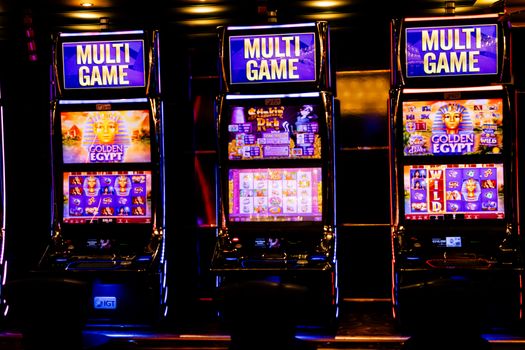
Slot machines are the most volatile games in the casino. A player might spin the reels a hundred times without a significant win, then hit a large jackpot that skews the average. Table games like baccarat or blackjack have lower volatility, as wins and losses tend to come more evenly.
Understanding variance is important for managing your bankroll and expectations. High-volatility games may offer the chance for a big payday but risk rapid losses, while low-volatility games provide steadier, smaller wins and losses.
For example, in a 2022 study of slot machine results, it was found that the standard deviation (a measure of volatility) was up to 4 times higher in progressive slots than in classic three-reel slots. This means your results can swing more dramatically in games with higher variance.
Game Theory and Optimal Strategies
Mathematics is not just about calculating odds; it also powers strategies. Game theory, a branch of mathematics focused on decision-making, is used by players and casinos alike to develop optimal strategies.
Blackjack is a prime example. Using probability, mathematicians have mapped out basic strategy charts that tell you the mathematically best move for every possible hand. When followed precisely, basic strategy can reduce the house edge to as little as 0.5%. Some skilled players even use card counting—tracking the ratio of high to low cards left in the deck—to gain a slight edge over the casino. This technique, popularized by the MIT Blackjack Team in the 1980s, is legal but frowned upon by casinos, which have implemented measures to prevent it.
In poker, game theory optimal (GTO) strategies attempt to make a player’s decisions unexploitable over the long run. While no strategy can guarantee consistent wins against the randomness of the cards, mathematical approaches can maximize your chances and minimize losses.
Randomness, Fairness, and Modern Casino Technology
Modern casino games—especially online—rely on complex algorithms to ensure fairness and randomness. Random number generators (RNGs) use mathematical formulas to produce unpredictable results for slot machines, digital roulette, and other games. Regulators require rigorous statistical testing to ensure these algorithms cannot be predicted or manipulated.
For example, the UK Gambling Commission mandates that all licensed online slots must undergo independent testing to verify that their RNGs meet statistical standards for randomness, typically requiring billions of simulated spins.
Casinos also use mathematics to detect cheating and fraud. Statistical analysis of betting patterns can reveal anomalies that may indicate card counting, collusion, or software manipulation.
Final Thoughts: Using Mathematics to Play Smarter
Mathematics is the invisible hand that shapes every casino game. From the house edge to the volatility of slot machines, from probability calculations to the use of game theory, numbers dictate the rhythm and outcome of every wager.
For the average casino visitor, understanding these mathematical principles can add a new layer of enjoyment and control. It helps set realistic expectations, prevent risky behavior, and even spot games where skill and strategy can make a difference. While the house always holds the long-term advantage, a mathematically informed player can stretch their bankroll, enjoy more playtime, and sometimes walk away a winner.